Closing the Real-Time Data Gap in Cancer Care
The cancer community agrees on one goal: data should drive better outcomes. Yet a critical gap remains between how real-time is understood by clinical and administrative leaders and how the term is often interpreted in cancer registry operations.
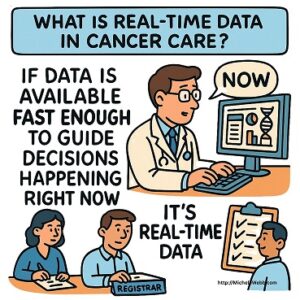
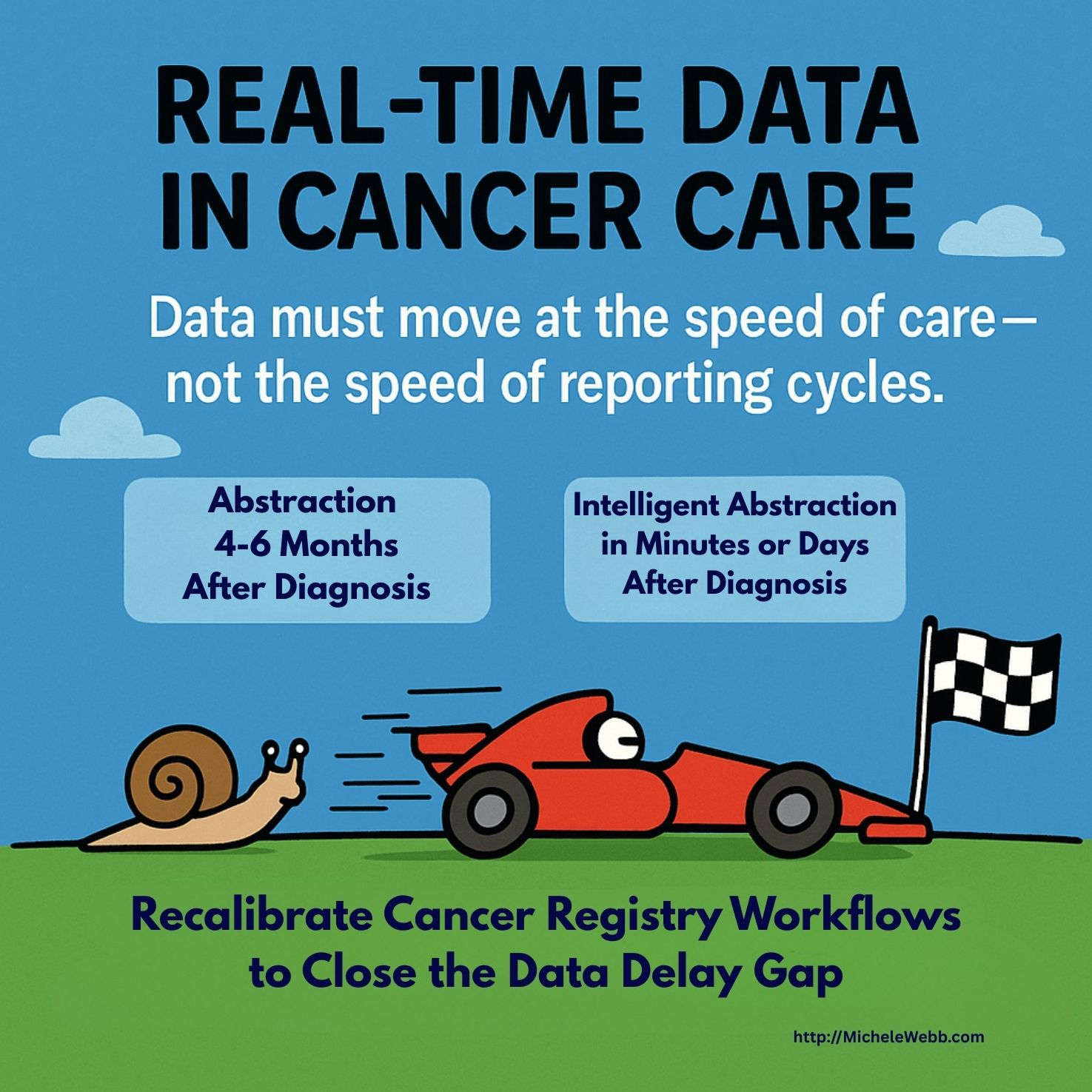
For hospital leadership and clinicians, real-time means having access to curated data as events occur, so their current decisions reflect current reality. However, for many cancer registrars, long-standing reporting expectations have shaped a different norm: “real-time” as full abstraction completed within 4–6 months of diagnosis. But this delayed standard no longer matches the operational or clinical data needs of administrators and providers.
Two Definitions, One Misalignment
NAACCR’s Real-Time Reporting Taskforce draws a clear distinction: real-time refers to data processed “at once” or “instantaneously,” while timely refers only to availability “at a suitable, opportune time.”¹ The difference is not semantic, it is structural.
Meanwhile, research on registry timeliness shows that a major contributor to access and reporting delay is the abstraction interval itself. When abstraction occurs 4-6 months after a cancer diagnosis, the resulting dataset becomes retrospective rather than actionable.
A Path Forward: Real-Time as a Shared Standard
The goal is not to diminish the skill or judgment of cancer registrars. It is to elevate their strategic impact by recalibrating registry workflows to what frontline clinical teams require.
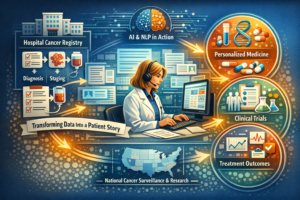
To close this alignment gap, service-line leaders and cancer registrars must agree on shared definitions, then architect systems (electronic feeds for pathology, imaging, the EHR, intelligent casefinding and data abstraction) to deliver actionable data in hours or days rather than weeks or months. Ultimately, only by shifting toward true real-time data extraction and its use can cancer programs fully leverage data for care, quality, and operational responsiveness.
In summary, cancer care increasingly relies on data that moves at the speed of care, not the speed of historical reporting cycles. As hospitals adopt AI-automation with intelligent casefinding and abstraction cancer registrars will have an essential role in shaping the future of cancer intelligence. Aligning on a modern definition of real-time is the first step toward that transformation.
(Article first published on LinkedIn.)
\ Get the latest news /