Cancer Registry Defines Next Steps
Cancer registry data is the bridge between clinical reality and operational decisions, because it does not just record events, it makes them actionable. “What happened” becomes “what do we do next” when registrars deliver standardized, decision-grade data fast enough to influence pathways, clinical decisions, and service-line strategy. Automation and workflow optimization is the amplifier: it […]
Bridge Between Clinical and Operational Reality
Cancer registry data does not just describe care, it makes care measurable, comparable, and accountable across silos, sites, and time. When we translate clinical reality into operational truth, we turn anecdotes into evidence and dashboards into decisions that actually change outcomes. The question is not whether we have data, it’s whether we are using it […]
Decision-Ready Data: Where Is It?
Assets like the cancer registry are, by design, used to amplify and strengthen the oncology service line. Each case in the Registry contains decision-ready data that is carefully coded and validated by an ODS who received specialized training. The equation looks like this: ODS + Workflow Optimization + Validated Data = Clinical and Operational Decision […]
It’s a Privilege
It has been my honor and privilege to serve as a cancer registrar, speaker, and author for the past 20+ years! Registrars are a unique healthcare professional, highly trained in anatomy and physiology, cancer disease process, and the healthcare delivery process. Not only has clinical and scientific medicine changed dramatically since I first started, but […]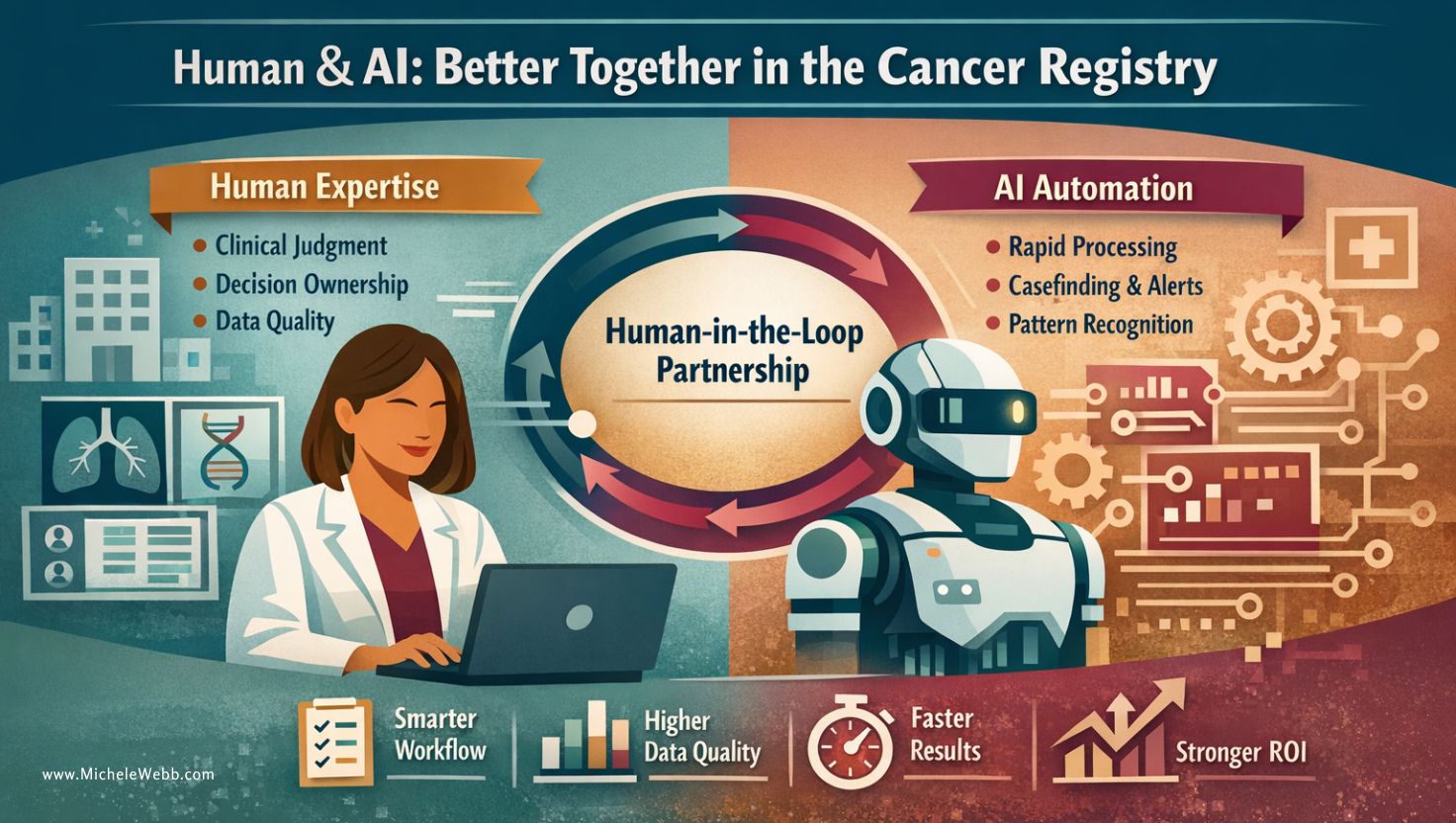
Human and AI: Better Together in the Cancer Registry
Cancer registrars are expected to keep pace with expanding requirements, improve timeliness, and deliver increasingly complex analytics, often without the option to add more staff. It is no surprise that the conversation turns to technology: automation, smarter workflows, and AI-supported casefinding and abstraction. But when AI is introduced as part of a “do more with […]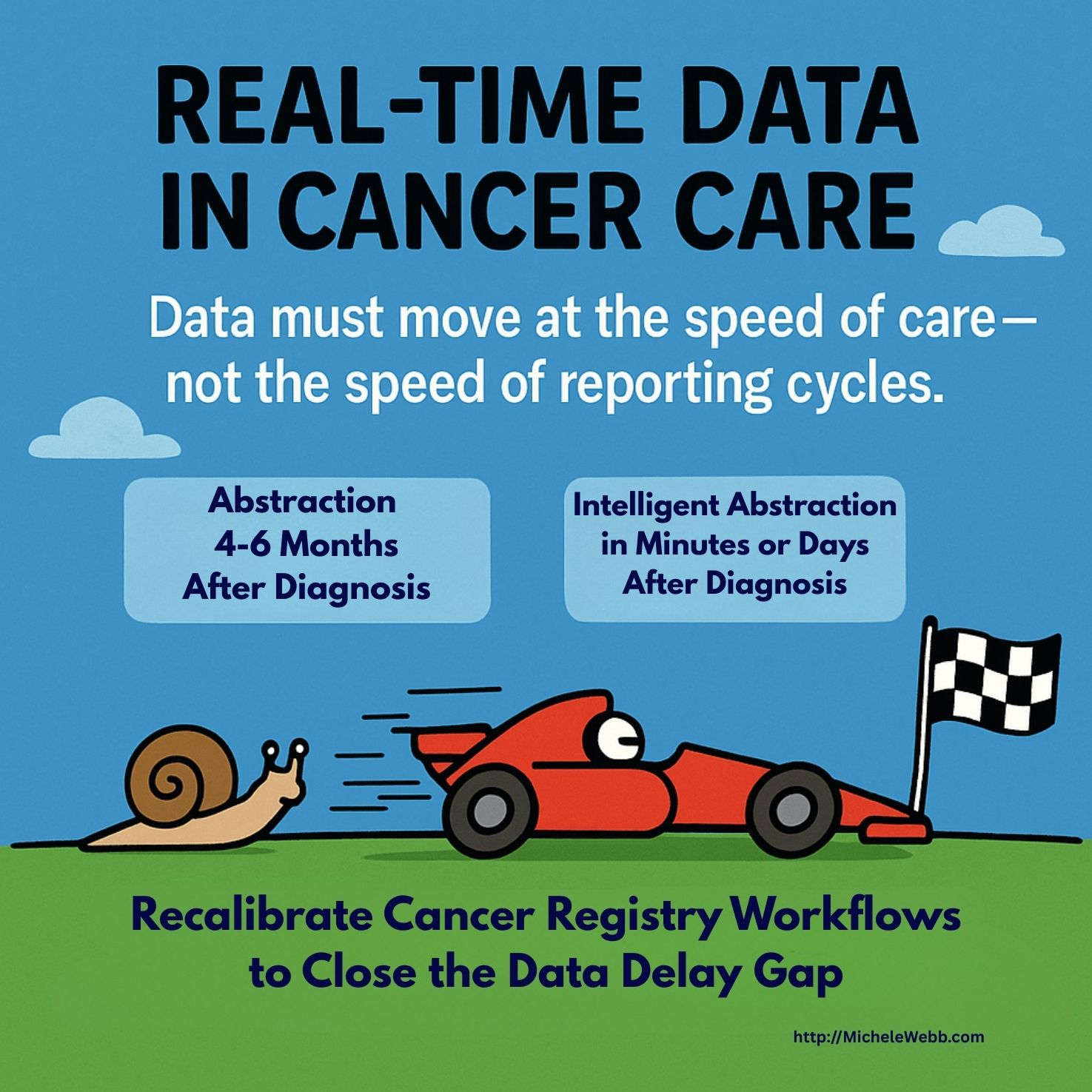
Closing the Real-Time Data Gap in Cancer Care
The cancer community agrees on one goal: data should drive better outcomes. Yet a critical gap remains between how real-time is understood by clinical and administrative leaders and how the term is often interpreted in cancer registry operations. For hospital leadership and clinicians, real-time means having access to curated data as events occur, so their […]