
Think Beyond the Obvious
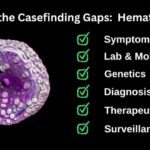
The real challenge is finding what was missed. In an earlier post we explored how clinically diagnosed lung cancers often escape case finding. But the problem runs deeper: incomplete casefinding does not just miss patients—it reshapes the national picture of cancer itself. When symptom-based encounters, LDCT screening and imaging reports with ambiguous terminology, or clinical […]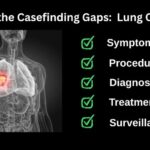
Close the Gap: Lung Cancer
1 in 10 lung cancers are clinically diagnosed.Weak casefinding = missed cases. Roughly 1 in 10 lung cancers in the US are not pathologically confirmed, representing thousands of clinically diagnosed cases not collected in the cancer registry (SEER, 2025). These cases may be overlooked if limited ICD-10 code sets are used that do not account […]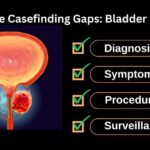
Close the Gap: Bladder Cancer
A symptom may be the first red flag.Bladder cancers often hide in plain sight. Bladder cancer cases surface from the inpatient and outpatient settings, each telling a story that pathology alone cannot capture. When casefinding workflows depend only on positive pathology, clinically diagnosed or recurrent cases are easily overlooked. Each omission distorts the cancer registry’s accuracy […]
Close the Gap
You can’t manage what you don’t count.Missed cases silently erode credibility and performance. Hospitals feel the financial and operational drag of delayed or missed case reporting long before it shows up in dashboards. The rationale, backed by research, is simple: every missed case requires extra work, delays reporting, and weakens quality, treatment outcomes, and value-based […]
Case Finding is the Foundation
Finding EVERY cancer case is not optional.It is foundational to cancer program integrity. Casefinding is not just a cancer registry workflow. It is the foundation of every cancer program quality measure, accreditation, and KPI. Without it, the cancer registry is not only under-performing but puts the hospital credibility at risk. Every case matters and cancer […]
Cancer Registry Data Stewardship
Cancer Registry data curation isn’t extra.Good stewardship drives change. Cancer registrars have always shouldered the responsibility of abstracting data, but the role now demands more. In this series, we’ve shown how registrars can move beyond manual tasks to become curators of real-time, accurate, and actionable data. The final step in this transformation is stewardship. Stewardship […]
Curation Makes Registry Data Actionable
Cancer Registrars connect data to patient care.Curation make it actionable. Cancer registrars have long been valued for their accuracy and attention to detail. But when the registry’s role is limited to meeting minimum required fields, that expertise is under-utilized. Compliance-focused, concurrent abstracting augmented by automation, creates static snapshots—not tools for intervention, insight, or innovation. Curating […]
Curated Data Drives Care
Cancer data without curation is noise.Curated data drives care. Every case curated by a cancer registrar expands the ability of providers to make timely, accurate, and life-saving decisions. Retrospective abstracting produces compliance data, but curating in near real-time, supported by automation, transforms fragmented records into structured insights that matter in real time. The difference between […]