
Smarter, Sustainable Cancer Registries
Are You Building a Smarter, Sustainable Cancer Registry? The most efficient, least costly, and most accurate way for a cancer registry to maintain and grow is not by doing the bare minimum or adding more staff — it is by implementing AI automation that is paired with strong best practices and quality control. Automation handles […]
Cancer Registries Are at a Fork in the Road
Cancer registries face a turning point. Case-finding, abstraction, and follow-up once depended entirely on manual effort, but data demands have grown exponentially in the last decade. Hospitals now require near real-time information to support quality reporting, value-based care, personalized medicine, and population health. Artificial intelligence (AI) offers a solution, but adoption requires engagement and clarity […]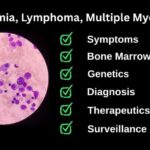
Closing Casefinding Gaps in Leukemia, Lymphoma and Multiple Myeloma
Automation sees what routine workflows miss. Real-time data turns “negative” into knowledge. The American Cancer Society projects 2,041,910 new cancer diagnoses in 2025, with hematologic malignancies accounting for 9.5% of all leukemia, lymphoma, and multiple myeloma cases. Roughly two-thirds of these patients will undergo a bone marrow aspirate biopsy as part of staging or diagnosis. Yet, […]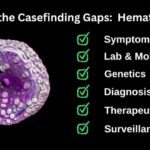
Close the Gap: Hematology
Clinical data tells the story pathology cannot. Roughly 8–12% of hematologic malignancies are clinically diagnosed rather than pathologically confirmed (Deppen et al., 2020; CDC USCS, 2025). Without deliberate data curation, they may never be reviewed or abstracted by the cancer registry. When medical disease indices (MDI) are pre-filtered and do not include all ICD-10 codes, […]
Think Beyond the Obvious
The real challenge is finding what was missed. In an earlier post we explored how clinically diagnosed lung cancers often escape case finding. But the problem runs deeper: incomplete casefinding does not just miss patients—it reshapes the national picture of cancer itself. When symptom-based encounters, LDCT screening and imaging reports with ambiguous terminology, or clinical […]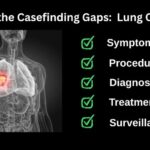
Close the Gap: Lung Cancer
1 in 10 lung cancers are clinically diagnosed.Weak casefinding = missed cases. Roughly 1 in 10 lung cancers in the US are not pathologically confirmed, representing thousands of clinically diagnosed cases not collected in the cancer registry (SEER, 2025). These cases may be overlooked if limited ICD-10 code sets are used that do not account […]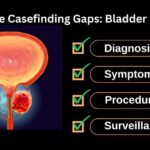
Close the Gap: Bladder Cancer
A symptom may be the first red flag.Bladder cancers often hide in plain sight. Bladder cancer cases surface from the inpatient and outpatient settings, each telling a story that pathology alone cannot capture. When casefinding workflows depend only on positive pathology, clinically diagnosed or recurrent cases are easily overlooked. Each omission distorts the cancer registry’s accuracy […]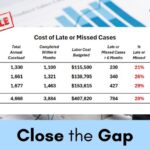
Close the Gap
You can’t manage what you don’t count.Missed cases silently erode credibility and performance. Hospitals feel the financial and operational drag of delayed or missed case reporting long before it shows up in dashboards. The rationale, backed by research, is simple: every missed case requires extra work, delays reporting, and weakens quality, treatment outcomes, and value-based […]