
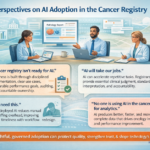
Perspectives on Registry Automation: Firestorm or Reality?
Recent perspectives on the adoption of AI to support cancer registry casefinding, abstraction, and analytics have landed differently across the community. The intensity of the feedback signals something important: a shared commitment to data integrity, accurate patient stories, and the long-term credibility of cancer registry work. To move the conversation forward, it helps to set […]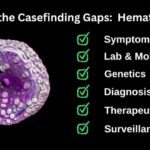
Close the Gap: Hematology
Clinical data tells the story pathology cannot. Roughly 8–12% of hematologic malignancies are clinically diagnosed rather than pathologically confirmed (Deppen et al., 2020; CDC USCS, 2025). Without deliberate data curation, they may never be reviewed or abstracted by the cancer registry. When medical disease indices (MDI) are pre-filtered and do not include all ICD-10 codes, […]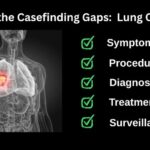
Close the Gap: Lung Cancer
1 in 10 lung cancers are clinically diagnosed.Weak casefinding = missed cases. Roughly 1 in 10 lung cancers in the US are not pathologically confirmed, representing thousands of clinically diagnosed cases not collected in the cancer registry (SEER, 2025). These cases may be overlooked if limited ICD-10 code sets are used that do not account […]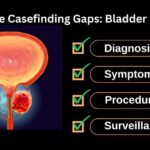
Close the Gap: Bladder Cancer
A symptom may be the first red flag.Bladder cancers often hide in plain sight. Bladder cancer cases surface from the inpatient and outpatient settings, each telling a story that pathology alone cannot capture. When casefinding workflows depend only on positive pathology, clinically diagnosed or recurrent cases are easily overlooked. Each omission distorts the cancer registry’s accuracy […]
Curated Data Drives Care
Cancer data without curation is noise.Curated data drives care. Every case curated by a cancer registrar expands the ability of providers to make timely, accurate, and life-saving decisions. Retrospective abstracting produces compliance data, but curating in near real-time, supported by automation, transforms fragmented records into structured insights that matter in real time. The difference between […]
Efficiency Comes in Phases
Abstracting efficiency does not come retrospectively.Efficiency comes in phases and moves with the patient. For decades, cancer registrars have been trained to abstract retrospectively—waiting until treatment was complete to build a complete case in a single abstracting session. Despite increasing pressure from physicians and administrators to provide real-time information, cancer registries have continued to hold […]
Abstracting That Moves With the Patient
Cancer case abstracting is not linear.It should move with the patient. For decades, cancer registry abstracting has been linear, cases stacking up, abstracts finalized months after diagnosis, and data delivered after the patient’s treatment was complete. This retrospective approach has created reporting delays, backlogs, and stale information that can no longer influence care. Concurrent abstracting […]
Incomplete Data Weakens Outcomes
Incomplete data tells incomplete stories.Missing pieces weaken outcomes! A cancer registry is more than a database—it is the cornerstone of how cancer patients are diagnosed and treated. But what happens when pieces of that story are missing? A pathology report never entered. An outpatient therapy not coded. A recurrence found on the medical disease index […]