

Why Saying AI Solutions Can “Do More With Less” Triggers Fear
“Do more with less.” Four words that can instantly trigger alarm for cancer registrars. For many, the phrase activates a stress response rooted in familiar pressures: unrealistic expectations, shrinking timelines, or a perceived loss of control. When a team is already operating at maximum capacity, it can widen the gap between what leadership expects and […]

Think Beyond the Obvious
The real challenge is finding what was missed. In an earlier post we explored how clinically diagnosed lung cancers often escape case finding. But the problem runs deeper: incomplete casefinding does not just miss patients—it reshapes the national picture of cancer itself. When symptom-based encounters, LDCT screening and imaging reports with ambiguous terminology, or clinical […]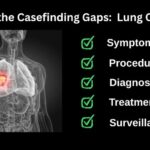
Close the Gap: Lung Cancer
1 in 10 lung cancers are clinically diagnosed.Weak casefinding = missed cases. Roughly 1 in 10 lung cancers in the US are not pathologically confirmed, representing thousands of clinically diagnosed cases not collected in the cancer registry (SEER, 2025). These cases may be overlooked if limited ICD-10 code sets are used that do not account […]
Close the Gap
You can’t manage what you don’t count.Missed cases silently erode credibility and performance. Hospitals feel the financial and operational drag of delayed or missed case reporting long before it shows up in dashboards. The rationale, backed by research, is simple: every missed case requires extra work, delays reporting, and weakens quality, treatment outcomes, and value-based […]
Case Finding is the Foundation
Finding EVERY cancer case is not optional.It is foundational to cancer program integrity. Casefinding is not just a cancer registry workflow. It is the foundation of every cancer program quality measure, accreditation, and KPI. Without it, the cancer registry is not only under-performing but puts the hospital credibility at risk. Every case matters and cancer […]
Your Data Should Travel as Far as Your Patients
Outpatient cancer care reaches miles into the community.So should your Registry data. In today’s landscape, relying on inpatient-only records or admission (ADT) codes is a fast track to missed cases and incomplete reporting. To read or download the entire article, click here hashtag#OncologyData hashtag#HealthIT hashtag#OutpatientCare hashtag#Casefinding hashtag#AIinOncology hashtag#ThePowerOfOne hashtag#MicheleWebbODS
Outpatient Oncology is Redrawing the Map-Is Your Registry Keeping Up?
Outpatient cancer care now accounts for the majority of services—but is your registry still operating on less than 100% of all the casefinding and abstracting source documents? If you can’t see the data, you can’t count it. In my new article, “Outpatient Oncology Is Redrawing the Map—Is Your Registry Keeping Up?” learn how cancer registrars […]