Beyond Pathology: Building an End-to-End Casefinding Workflow
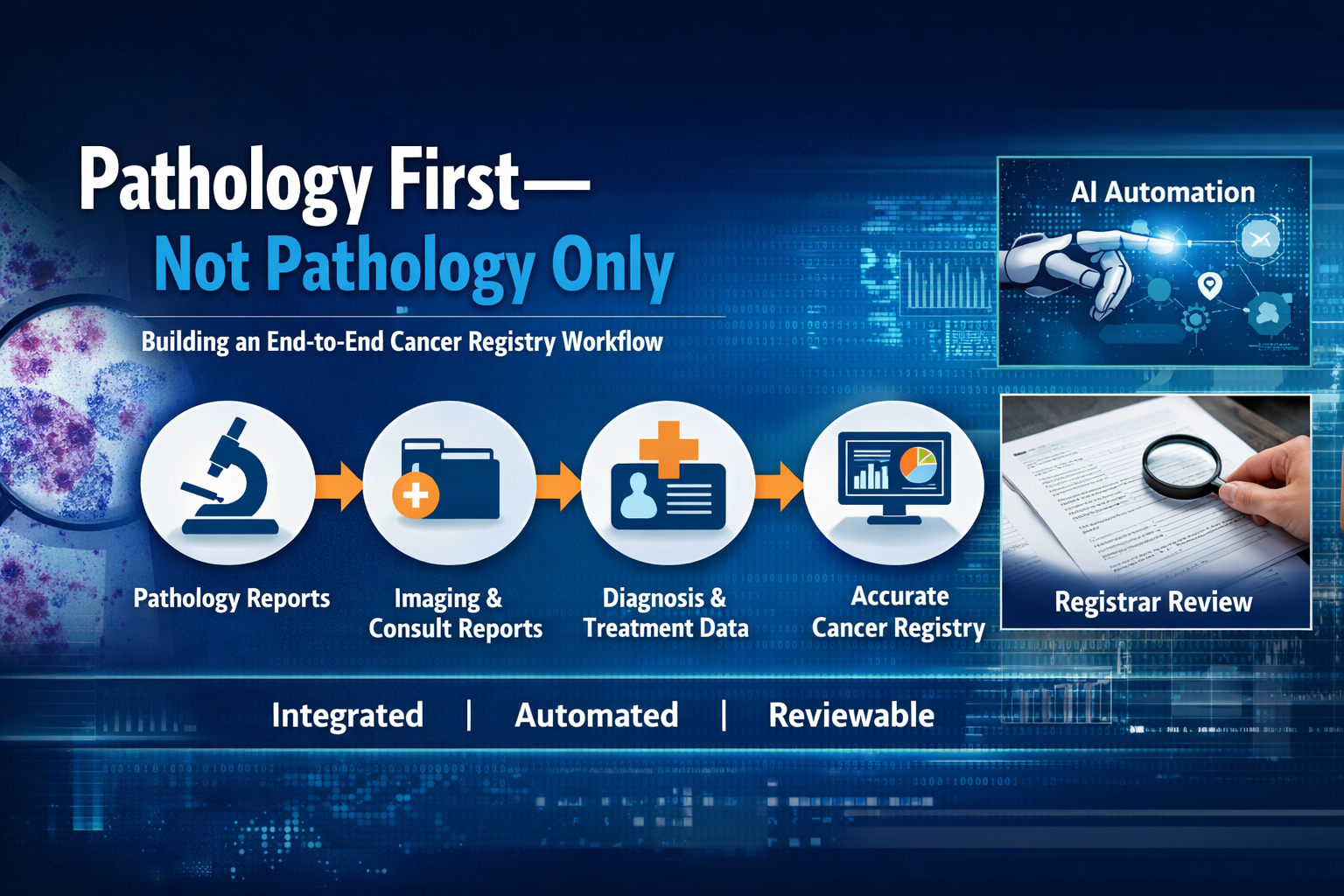
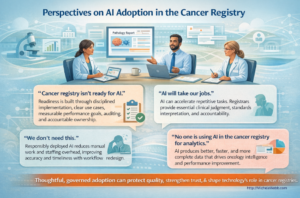
As cancer registry data management continues to evolve, optimizing casefinding workflows is essential for improving data accuracy while strengthening efficiency and productivity. Pathology is often the first—and primary—casefinding source. Intelligent casefinding and AI-driven extraction from pathology can improve timeliness, reduce errors, and streamline day-to-day work.
Pathology reports are well suited to automation because their structured format—including CAP synopses—supports more consistent extraction than manual methods alone. But automation shouldn’t stop with pathology. To truly optimize the workflow end to end, registries should also integrate medical disease indices, imaging reports, and other cancer-directed consultation and treatment summaries so the full clinical picture is captured efficiently and consistently.
Vendor selection matters. Here are some questions to start the evaluation process and assess alignment with your facility:
✓ How are reportable cases selected?
✓ Which code sets, standards, and coding guidelines are used? How are they applied?
✓ How are amended, updated, repeating, and collections of reports processed?
✓ How are multiple primaries, unknown primary, or ambiguous cancer sites managed?
✓ How are source document inconsistencies or omissions surfaced?
✓ How are data discrepancies identified and separated from AI vs documentation issues?
✓ How is extracted data entered into the cancer case abstract?
✓ What controls support registrar visual review and editing?
✓ Are all data elements in the database(s) 100% relational?
✓ What data elements are available for operational, analytical, and statistical reports?
✓ How are pre-defined, recurring, and ad hoc reports generated?
✓ Will pathology reports be forwarded to the State Cancer Registry for compliance?
A strong automation strategy—built in partnership with the right vendor—can expand access to near real-time data, reduce errors, strengthen workflow performance, and ultimately support better patient outcomes. Don’t stop with a single data source. Continue adding inputs and refining the end-to-end workflow, paired with registrar visual editing and case review, to build a standards-aligned process that produces timely, accurate, decision-grade oncology intelligence.
The future of cancer registry management is an optimized, end-to-end, real-time workflow that streamlines and augments data collection—improving both accuracy and efficiency—while elevating the role of the cancer registrar.
Note: this post was first published on LinkedIn and can be viewed by clicking here.
\ Get the latest news /