Social Determinants of Health in Cancer Care
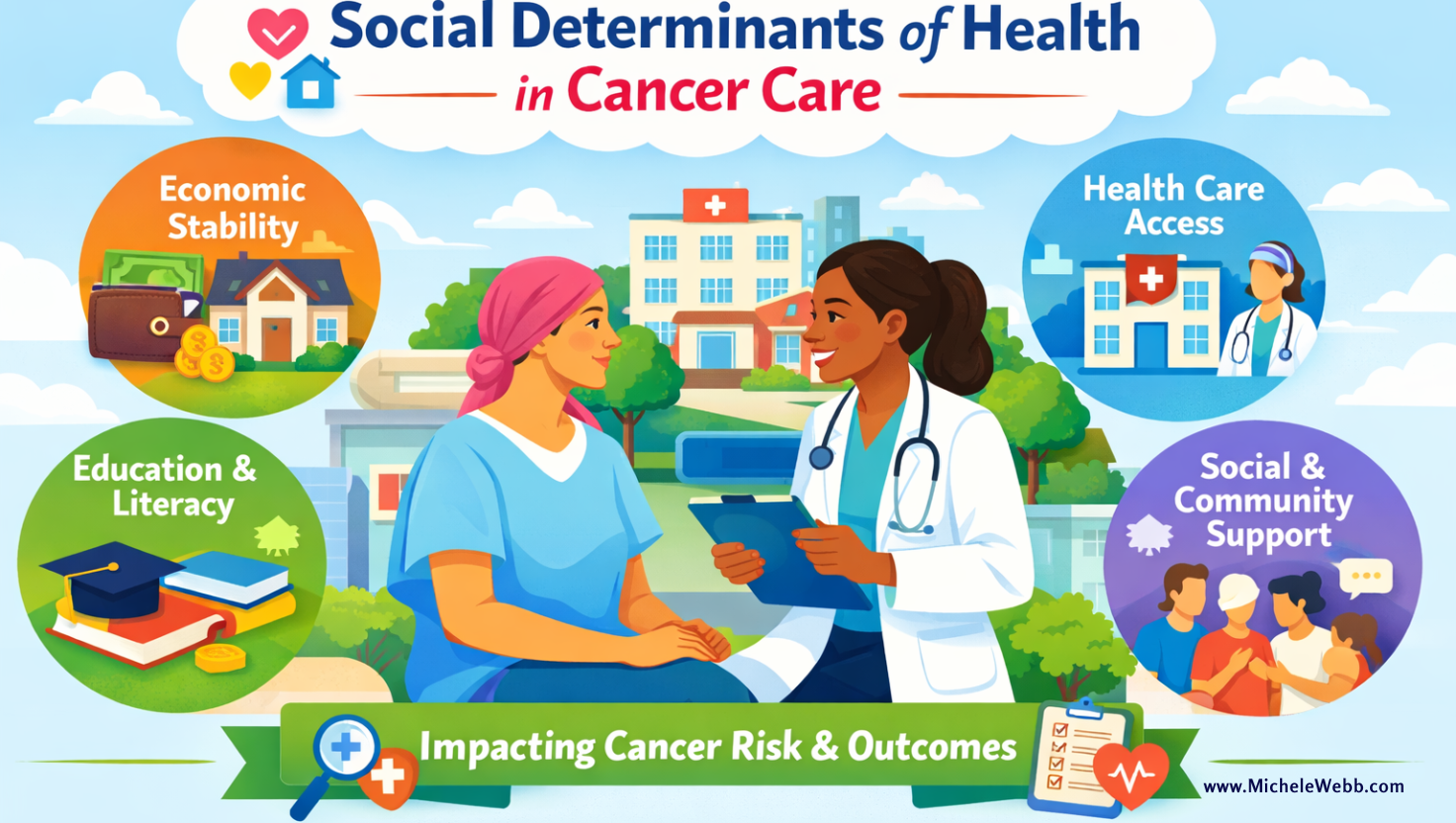
Cancer care is often discussed in terms of diagnoses, treatments, biomarkers, and clinical outcomes. But many of the factors that influence whether a patient is diagnosed early, starts treatment on time, and completes therapy should also be considered. These are Social Determinants of Health (SDOH), the non-medical conditions in the environments where people are born, grow, live, work, and age that shape health risks, access to care, and outcomes.
What Are SDOH?
The CDC describes SDOH as the non-medical factors that influence health outcomes and quality of life, shaped by broader systems such as policies, economic conditions, and social norms. SDOH is organized into five key domains:
- Economic Stability (income, employment, food security, housing stability)
- Education Access and Quality (literacy, language, graduation, early education)
- Health Care Access and Quality (insurance coverage, primary care access, culturally competent care)
- Neighborhood and Built Environment (housing quality, transportation, safety, pollution, healthy food access)
- Social and Community Context (social support, discrimination, community connection)
This framework matters because it helps cancer programs focus on real-world barriers and support, not just individual behavior.
Why SDOH Matters in Oncology
Cancer is a journey and SDOH can influence every step:
- Screening and early detection: transportation, cost, time off work, and childcare can affect whether patients get screened—often shifting diagnosis to later stages.
- Diagnosis and treatment start: barriers to specialty access, referral navigation, and affordability can delay initiation.
- Treatment adherence and completion: daily radiation visits, frequent labs, and follow-up care can become difficult when housing, transportation, finances, or caregiving support are unstable.
- Survivorship and outcomes: financial stress, limited support systems, and follow-up gaps can worsen long-term outcomes and quality of life.
Cancer disparities reflect the interaction of many factors, including SDOH, and can influence cancer risk and outcomes.
Where SDOH Data Lives Today
A practical advantage is that SDOH information already exists in many health systems, though it is often fragmented.
Medical Coding and the Medical Disease Index
Ideally, SDOH factors are extracted from clinical notes and documented using ICD-10-CM Z codes, commonly in the Z55–Z65 range, which cover circumstances such as housing and economic challenges and other psychosocial factors. These codes may be captured by medical coders and can surface in diagnosis-indexed tools such as the Medical Disease Index (MDI), depending on how a health system structures access to its coded data.
Cancer Case Abstraction
Cancer registrars convert complex clinical records into a structured, longitudinal story of cancer care, such as diagnosis, stage, tumor biology, treatments, timelines, and outcomes. This “patient story” is uniquely valuable because it connects what happened, when it happened, and how care unfolded across settings and providers. Through a careful review of the ICD-10-CM Z codes from sources such as the MDI, SDOH data can be captured in the cancer case abstract.
What SDOH Looks Like in the Real-World
SDOH is visible in a cancer program’s daily operations and care of patients. Here are some examples of how this information is reported:
- A patient misses radiation sessions because they do not have reliable transportation.
- A patient struggles with medication adherence because housing is unstable.
- A patient delays their appointments due to caregiving demands or inflexible work.
- A patient faces communication barriers or prior discrimination and finds the system difficult to navigate.
These are not peripheral issues. They directly affect treatment delivery and outcomes.
What Cancer Programs Should Do With SDOH
When cancer programs integrate SDOH into workflows, they can effectively:
- Identify where care barriers occur (screening, treatment start, missed visits, follow-up)
- Target navigation and supportive services to the patients who need them most
- Measure whether interventions reduce delays and improve completion rates
- Align community partnerships with data-driven needs
The Cancer Registry’s Vital Role
Much more work remains to fully integrate SDOH into actionable cancer intelligence. The cancer registry can play a vital role by helping to standardize and connect coded SDOH data with the longitudinal cancer care record; turning fragmented documentation into insight that supports equity-focused quality improvement, better patient support, and stronger outcomes.
Note: this article was first published on LinkedIn. Click here to view.
\ Get the latest news /