Cancer Registries: First Responders of Oncology Data
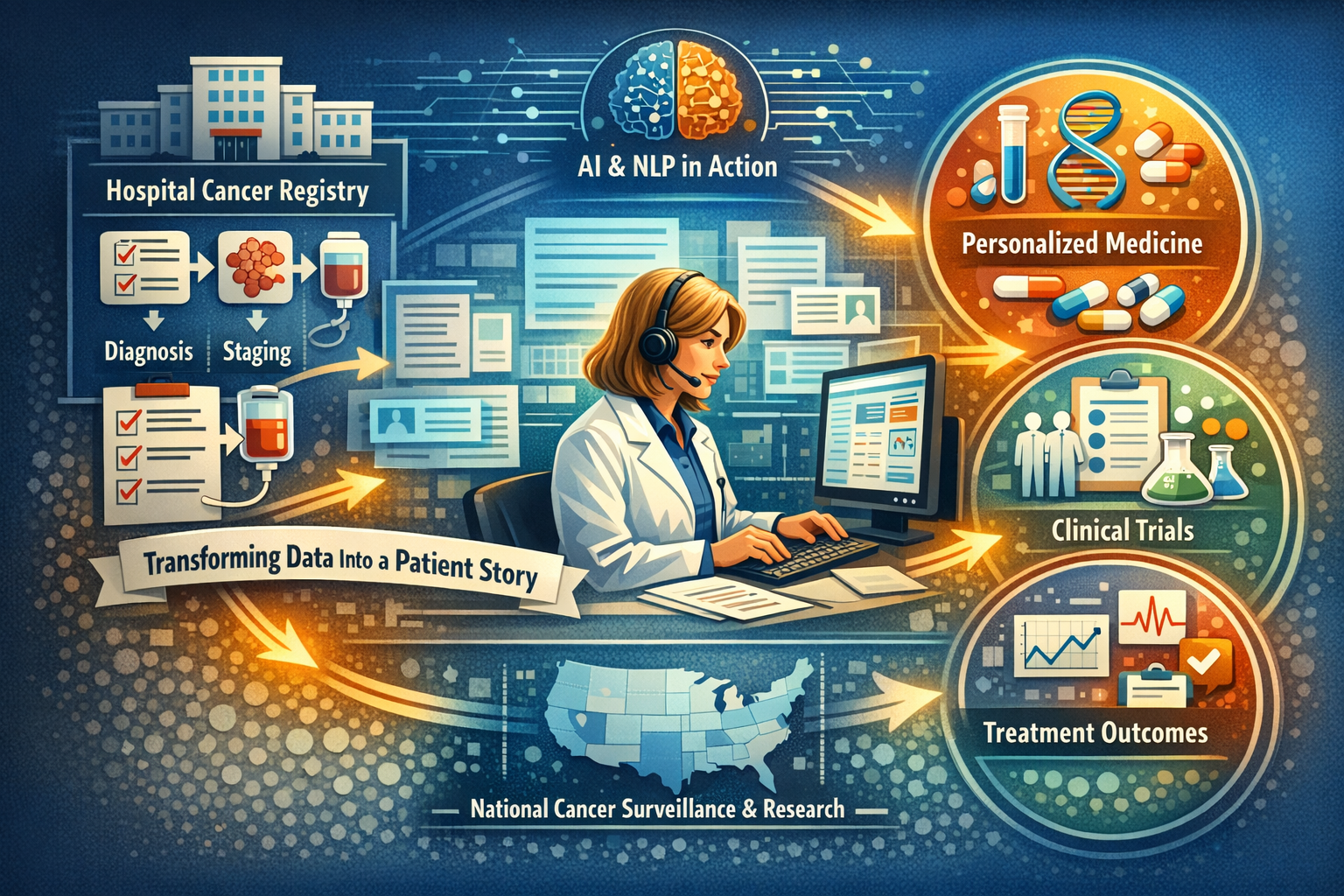
In the United States, hospital-based cancer registries serve as the first point of truth in cancer surveillance. Every confirmed diagnosis, staging element, treatment decision, and disease milestone begins here, with an Oncology Data Specialist and a data system built to capture the full arc of a patient’s cancer journey.
The Oncology Data Specialist: Turning Raw Clinical Detail Into a Patient Story
Oncology Data Specialists (ODS) are at the center of this work. They are the subject matter experts who translate complex, fragmented clinical bits of information into a coherent patient story, then convert that story into structured, high-quality cancer data the nation relies on to understand cancer burden and care delivery patterns.
That transformation matters well beyond the registry. Curated cancer data becomes the upstream source that fuels cancer accreditation programs, national cancer surveillance, survival statistics, quality benchmarks, and research priorities. It also supports modern oncology’s most urgent needs: personalized medicine, treatment outcomes analysis, clinical trials, and broader oncology data utilization that helps teams evaluate what is working, for whom, and why.
AI and NLP: Elevating the Foundation Without Replacing Expertise
Today, artificial intelligence (AI) and natural language processing (NLP) are elevating this foundation even further. Automated tools can scan, parallel to the patient journey, pathology reports, radiology studies, and clinical documentation to flag potential cases earlier and more consistently than manual review alone. They help detect missed cases, surface incongruent findings, and streamline multi-source casefinding.
But technology does not replace expertise; it amplifies it. Oncology Data Specialists validate, refine, and quality-check AI-extracted information to ensure accuracy, completeness, and fidelity to national standards. In that partnership, automation accelerates detection and prioritization, while the ODS ensures the data remains clinically meaningful, standards-aligned, and trustworthy.
A Stronger, More Timely Cancer Surveillance Pipeline
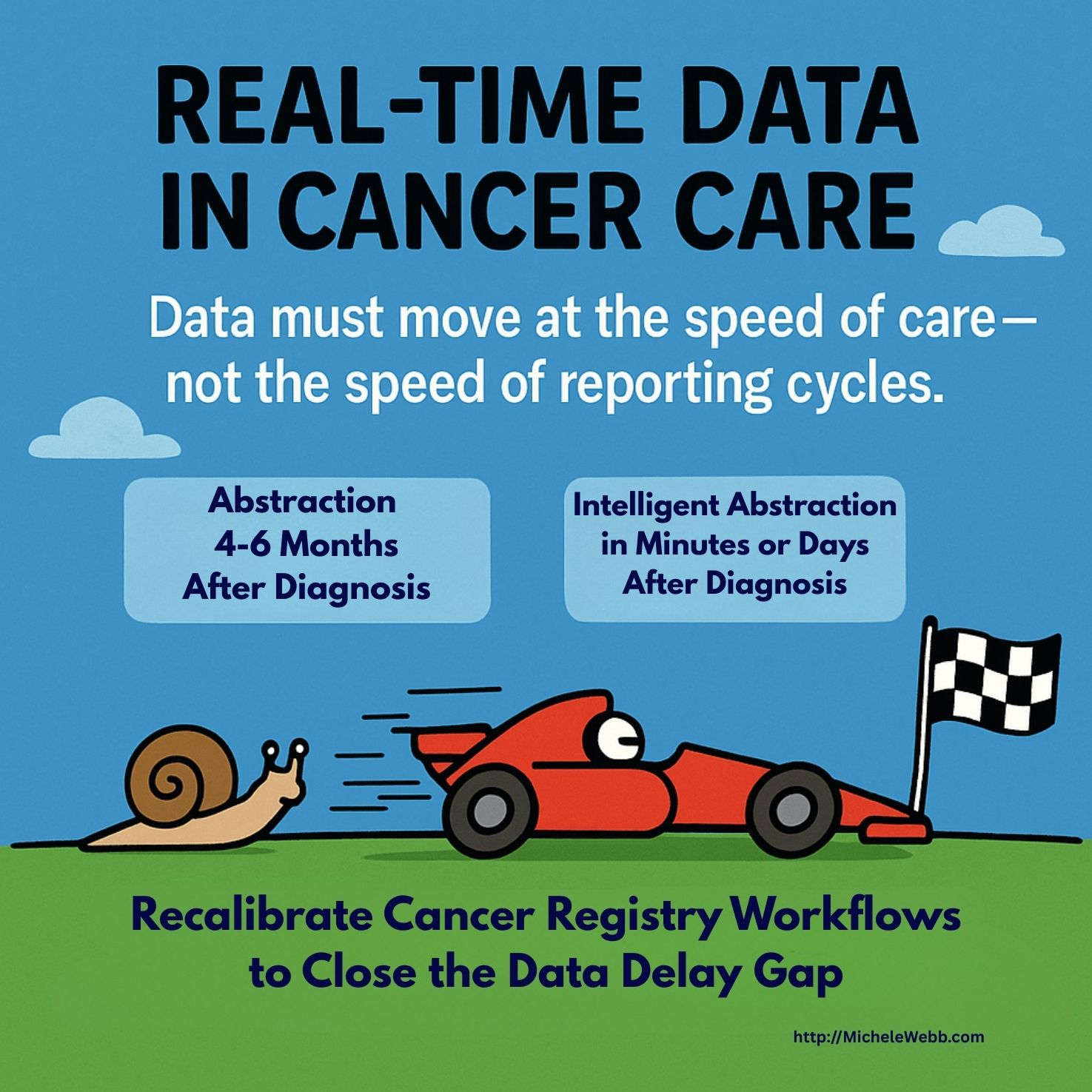
Together, expert abstraction and intelligent automation, as the first responders, create a stronger, more efficient, and more timely cancer surveillance pipeline, one that begins in every hospital registry and extends into the national understanding of cancer in the United States.
This article was originally published on LinkedIn. Click here to view.
\ Get the latest news /