Beyond Reporting – the Cancer Registry and Oncology Intelligence
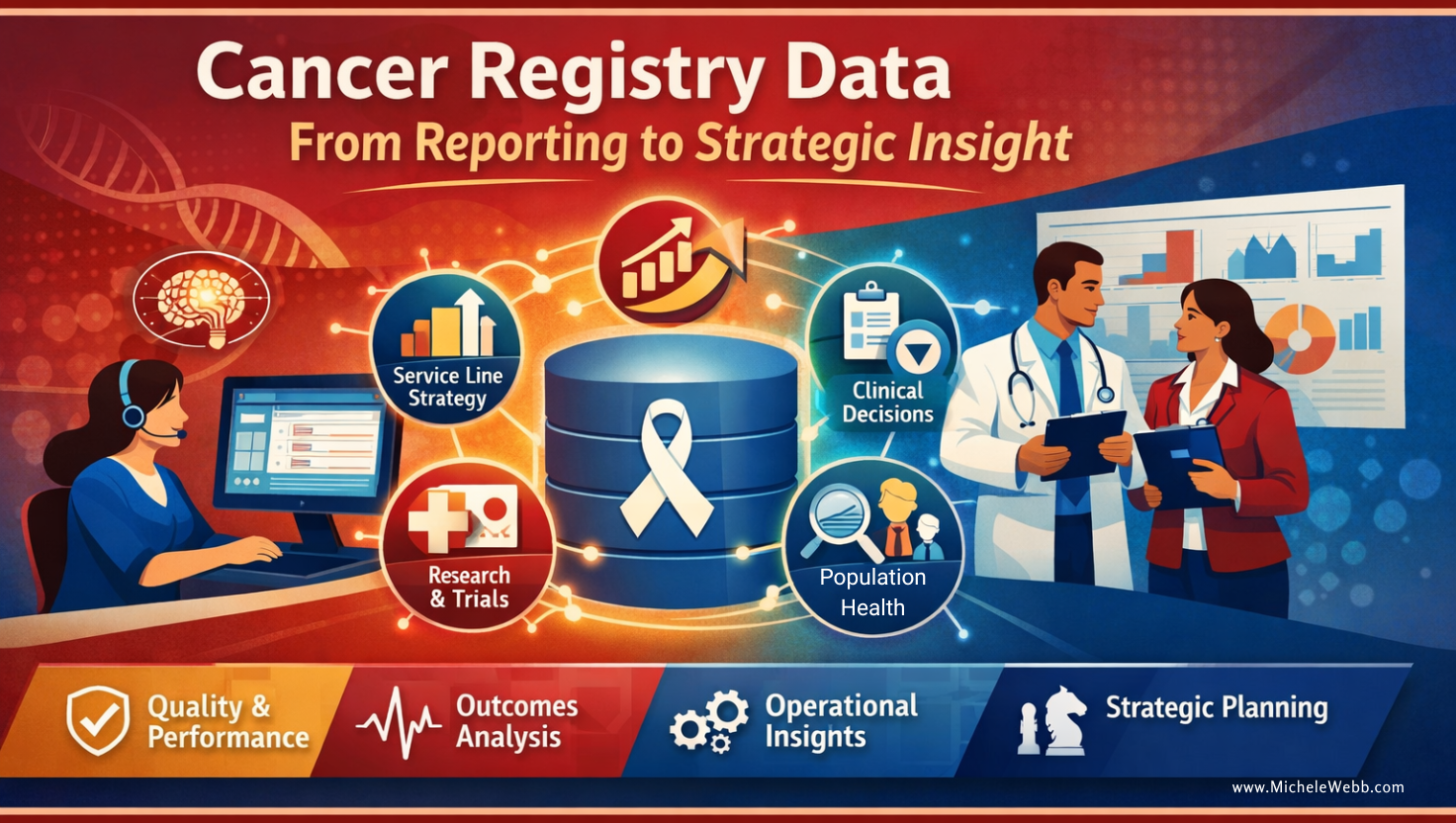
Hospital leadership is increasingly prioritizing decision-grade data: data that is timely, trusted, and usable across the enterprise. In that context, the cancer registry can and should be positioned as more than a mandatory reporting function—it can become a high-value data asset for the oncology service line.
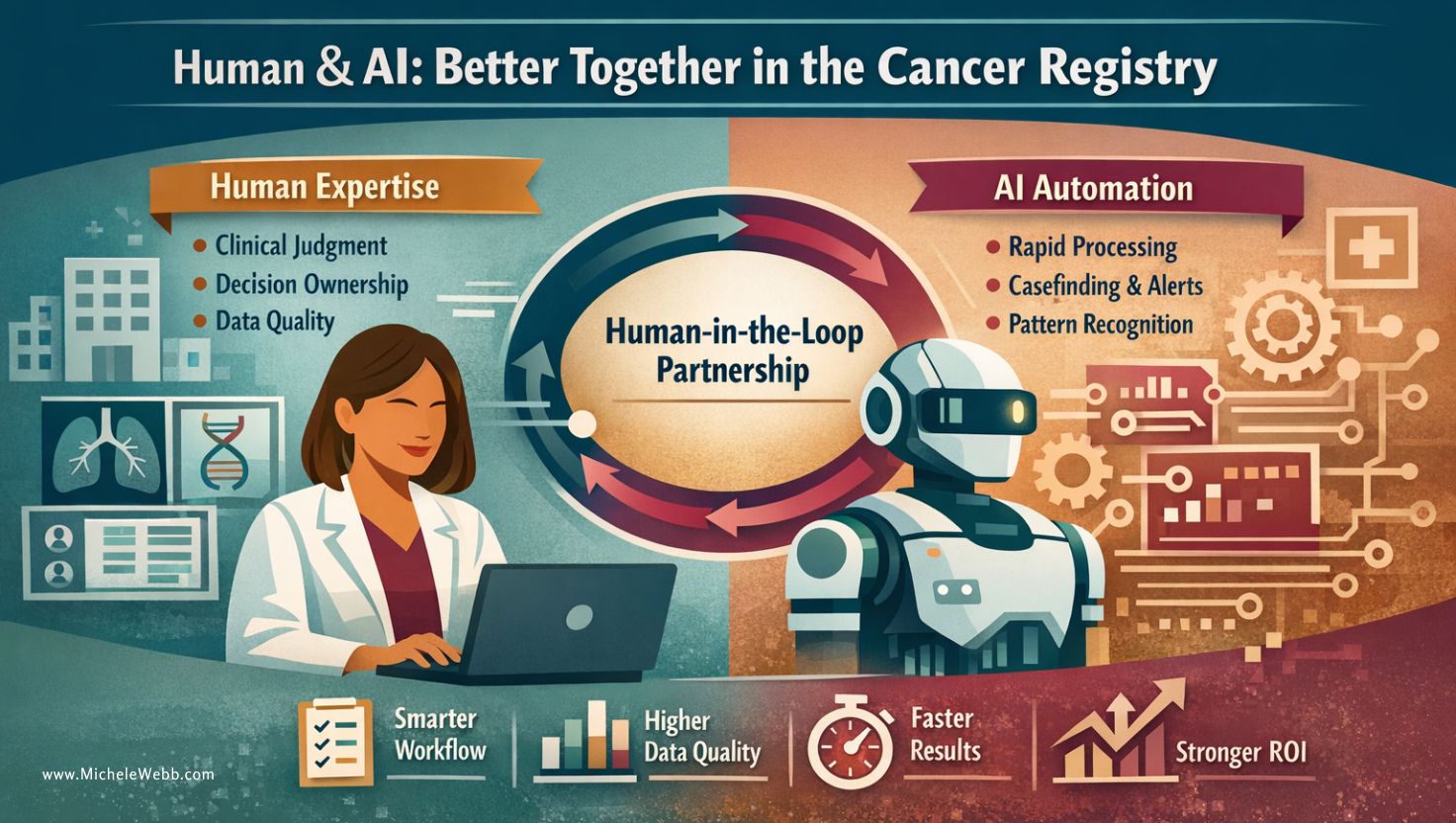
When registry data is captured concurrently, and at the same pace as the patient’s journey, and augmented with AI-enabled automation, the registry can function as a living, enterprise oncology dataset that supports both clinical and operational decision-making.
The differentiator is not simply data volume. It is curation. Cancer registry data is interpreted, validated, and structured by oncology subject matter experts who understand staging, treatment intent, recurrence, and the clinical narrative behind the codes, turning fragmented clinical documentation into a coherent, analyzable oncology story.
How Decision-Grade Registry Data Enables the Oncology Service Line
When cancer registry data is concurrent, curated, and automation-augmented, it becomes a foundation for outcomes that oncology administrators and registry leaders both care about:
1. Service line strategy
Reliable insights into volume and case-mix trends, site-specific growth patterns, referral movement, and market opportunities, supported by standardized oncology definitions and consistent data structure.
2. Clinical decision support and patterns of care
The ability to monitor pathway adherence, assess treatment variation, evaluate time-to-treatment patterns, and track outcomes using oncology-specific context that typical enterprise datasets do not capture cleanly.
3. Quality performance and accreditation readiness
A defensible backbone for quality measurement, targeted improvement efforts, and credible reporting, built on validated oncology data elements and consistent interpretation.
4. Research feasibility and outcomes
Cleaner cohorts with staging detail, biomarker context, and longitudinal endpoints, supporting feasibility assessment and more accurate population identification.
5. Healthcare equity and access
Disparity patterns by geography, access, and care delivery, anchored in structured oncology data rather than loosely defined proxies.
Message to administrators – fund a data asset, not a task
For oncology administrators, the strategic framing matters. An investment in the cancer registry is an investment in a decision-grade oncology data asset that strengthens decisions across care delivery, finance, and performance.
In summary, automating the cancer registry is not just a function of mandatory reporting. It is an investment in strategic data asset, a practical, scalable path to decision-grade oncology intelligence that improves clinical and business insights across the oncology service line.
Note: this article was first published on LinkedIn. To view click here.
\ Get the latest news /