Data Curation Changes Everything
Cancer case abstracting is evolving.
Curating the data makes it meaningful.
For decades, cancer registrars were trained in manual abstracting—retrospectively reviewing charts, searching, reading, and typing every detail, and finalizing cases months after treatment ended. The role was often defined by data entry rather than data impact.
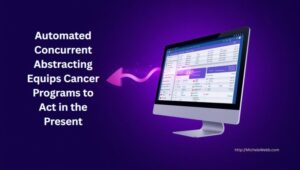
Data curation changes everything. To curate is to select, organize, validate, and contextualize cancer data so it becomes actionable. Automation and AI tools efficiently handle the repetitive tasks—casefinding, auto-extraction, coding, and populating fields—so registrars can focus on higher-value work: ensuring accuracy, applying clinical judgment, and interpreting patterns across sources (Yang et al., 2024).
Curation is not about replacing human expertise—it is about amplifying it. When registrars shift from manual abstracting to data curation, the cancer registry becomes a strategic hub that feeds quality and accreditation programs, supports real-time clinical and administrative decision-making, and strengthens research (Langhout et al., 2025). Data is not just collected; it is trusted, timely, and impactful.
In an era of value-based care, curating data ensures cancer registrars are far more than record-keepers, rather they evolve as quality stewards and partners in the delivery of better outcomes.
Curation is the bridge between raw data and meaningful insight — and with AI automation and concurrent abstracting, cancer registrars will lead that transformation in real time.
This article was first published on LinkedIn.
\ Get the latest news /